The digital information ecosystem is undergoing its most profound transformation since the dawn of the commercial internet. We have officially moved from the era of Information Retrieval—where users dig through lists of blue links—to the era of Information Synthesis, where AI agents read, reason, and provide direct answers.
For businesses, this is not just a trend; it is a fundamental market change detailed in our Comprehensive Strategic Research Report: The Paradigm Shift from Traditional SEO to Generative Engine Optimization (GEO). Strategies that guaranteed visibility in 2020—keyword stuffing and backlink velocity—are necessary but no longer sufficient.
A new set of rules governs this "Answer Economy." However, misinformation is rampant. We’ve analyzed the data to debunk the 10 most dangerous myths costing your business valuable AI citations.
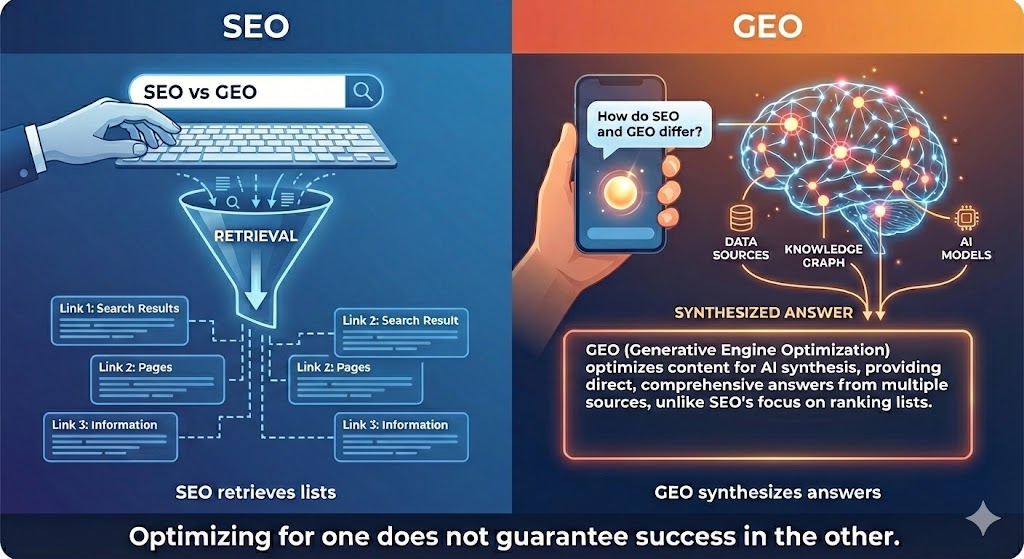
The Reality: SEO is about Ranking; GEO is about Reasoning.
Many marketers treat GEO as "SEO 2.0," assuming that if they rank high on Google, they automatically win on ChatGPT. This is false. As we clarify in our foundational definition, What Is GEO (Generative Engine Optimization)?, the goalposts have shifted. SEO targets deterministic algorithms (PageRank), while GEO targets probabilistic models (LLMs).
This requires a completely different mindset, a distinction we break down further in GEO vs. SEO in 2025: Why Ranking #1 is No Longer Enough.
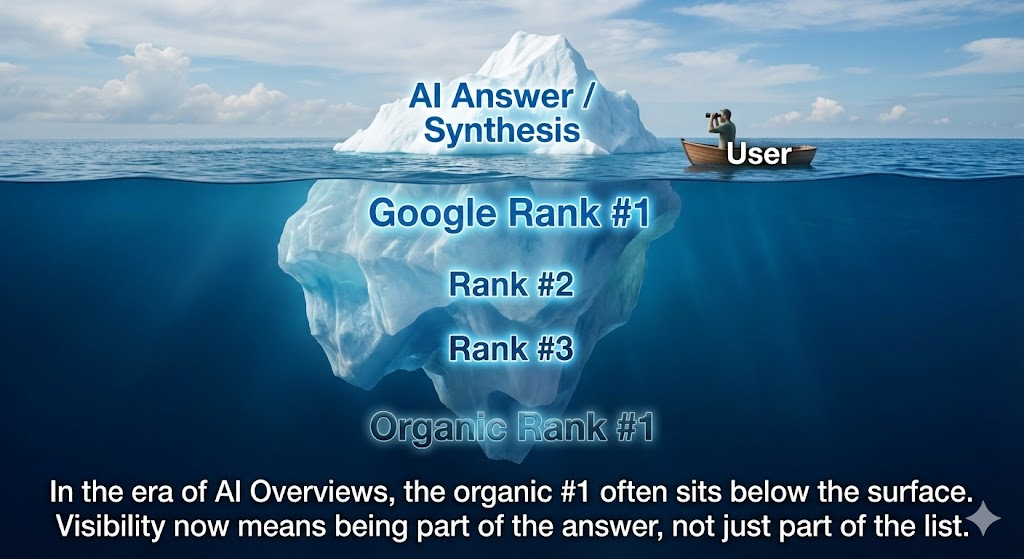
The Reality: Welcome to the "Invisible #1."
Data shows a weak correlation between traditional SERP rankings and LLM citations. Brands ranking on Google's first page are often mentioned in ChatGPT answers only 62% of the time. This contributes to a growing phenomenon where traditional metrics look grim while actual brand performance holds steady—a paradox we explore in The “Zero-Click” Reality: Why Traffic is Dropping but Brand Awareness is Rising.
Action: Stop obsessing over rank tracking. Start measuring your Share of Model (SoM).
The Reality: You can't program it, but you can influence the probability.
LLMs aren't random; they are inference engines. They crave structure. You can significantly increase your chances of being cited by formatting your content to be "machine-readable."
Action: Run your content through Geolify’s AI Indexability Audit to see if your structure is confusing the bots.
The Reality: It’s a polite introduction, not a VIP pass.
The /llms.txt file is a new standard to help AI bots navigate your site. However, research shows no current statistical correlation between having this file and getting more citations if the content quality is poor. It is a hygiene factor, not a ranking factor.
To implement this correctly without wasting resources, follow our step-by-step instructions in The LLMS.txt Optimization Checklist: Getting Your Website AI-Ready
Action: Implement llms.txt to future-proof your site for Agentic Search, but focus on content substance first.
The Reality: Entity Authority is the new king.
In the GEO era, context beats popularity. AI models care less about how many links you have (DA) and more about how consistently your brand is associated with a topic. This shift is monumental, effectively explaining Why “Entity Authority” is the New Domain Authority.
A mention of your brand on a hyper-relevant niche forum can be worth more to an LLM than a generic link from a high-DA news site.
Action: Focus on Digital PR and getting unlinked mentions in expert communities.
The Reality: It protects you from being seen.
If you block bots like GPTBot or ClaudeBot, you aren't just stopping them from training on your data; you are often preventing them from accessing your site for RAG (Retrieval-Augmented Generation). If a user asks, "What is the pricing for?" and you've blocked the bot, the AI will either say "I don't know" or cite your competitor's comparison page instead.
Action: Adopt a "selective permission" strategy. Don't opt out of the conversation.
The Reality: Schema is the language of certainty.
LLMs deal in probabilities. Structured data (Schema) turns probability into fact. This is a non-negotiable part of our GEO Optimization Checklist: Citation Tracking & Authority Building.
Action: Use nested schema to connect the dots for the AI.

The Reality: Beware the Mention-Source Divide.
This is critical.
80% of brands suffer from the "Mention-Source Divide," where their data is used to answer the question, but their competitor is recommended in the text.
Action: Use Geolify to audit whether you are being cited as a librarian or mentioned as a leader.
The Reality: Low volume, massive value.
Traffic from AI search engines converts at a rate 4.4x higher than traditional organic search. As we analyzed in The AI Search Conversion Opportunity: Why GEO Traffic Converts 4.4x Better Than Traditional Organic, the user has already asked questions, compared options, and is ready to act. The "funnel" has been compressed into a chat window.
Ignoring AI traffic because the volume is low today is like ignoring mobile traffic in 2008.
Action: Stop looking at "Sessions" and start looking at "Conversions per Session" from direct/AI sources.
The Reality: The "Citation Drift" is real.
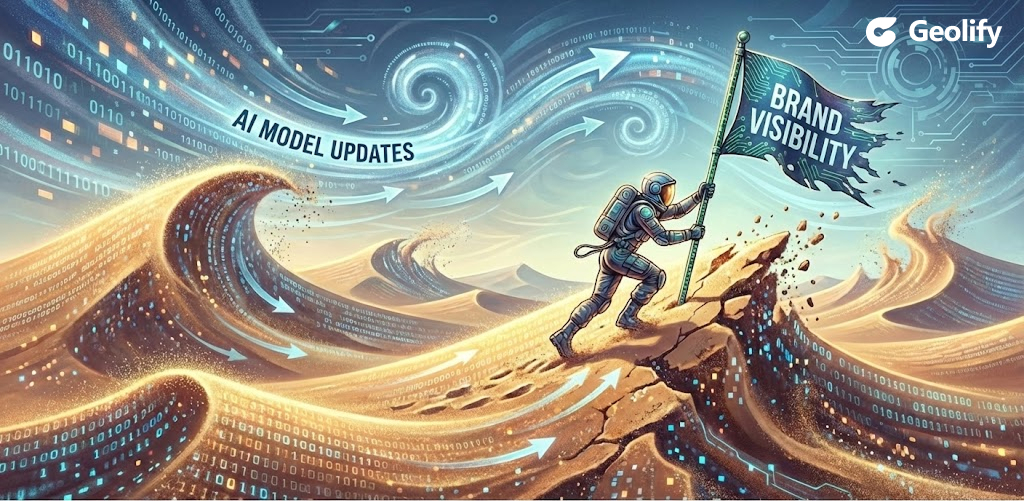
AI results are not static. Nearly 50% of citations for a specific query can change month-over-month due to model updates. You cannot "set it and forget it." For agencies, this volatility creates a recurring revenue opportunity, a concept we outline in The Agency Pivot: How to Sell GEO Services to Skeptical Clients.
Action: Audit your AI visibility monthly.
The shift from SEO to GEO isn't coming—it's here. The brands that win in 2026 will be the ones that understand how to optimize for the machine and the user.
Ready to see where you stand?
Don't guess. Know.
Geolify AI Audit – Find out if you’re a recommendation or just a footnote.

Packaging GEO Audits into Agency Retainers AI summary: Package a GEO audit as a fixed-scope entry product, then convert it into a monitoring-and-optimization retainer. Geolify’s audit landing page is consistently among the most-visited pages on our site — a demand signal, not a conversion promise. Pricing here is illustrative. Sell the audit as a fixed-scope […]

Zero UI is quietly reshaping how we search, make decisions, and engage with digital products in the zero-click era powered by AI agents. At platforms like Geolify.ai – a Generative Engine Optimization (GEO) platform – this shift isn’t just theoretical; it’s a fundamental change in how brands must position themselves to remain visible and selected. […]
Answer‑first writing bridges classic SEO with LLM Optimization (LLMO): use keywords, headings and schema, but open every section with a direct answer in the first 40–60 words so humans and AI search engines like Perplexity, ChatGPT and Google AI Overviews can extract it instantly. What Is Answer‑First Writing and Why It Matters Now Answer‑first writing […]