AI Search is growing 165 times faster than organic search, yet the vast majority of search behavior still occurs on Google—where AI Overviews now appear on roughly one-fifth of all queries, reaching billions of users monthly. Coupled with AI Mode, this marks Google Search's most significant pivot since the mobile era, forcing businesses to fundamentally rethink their SEO strategies.
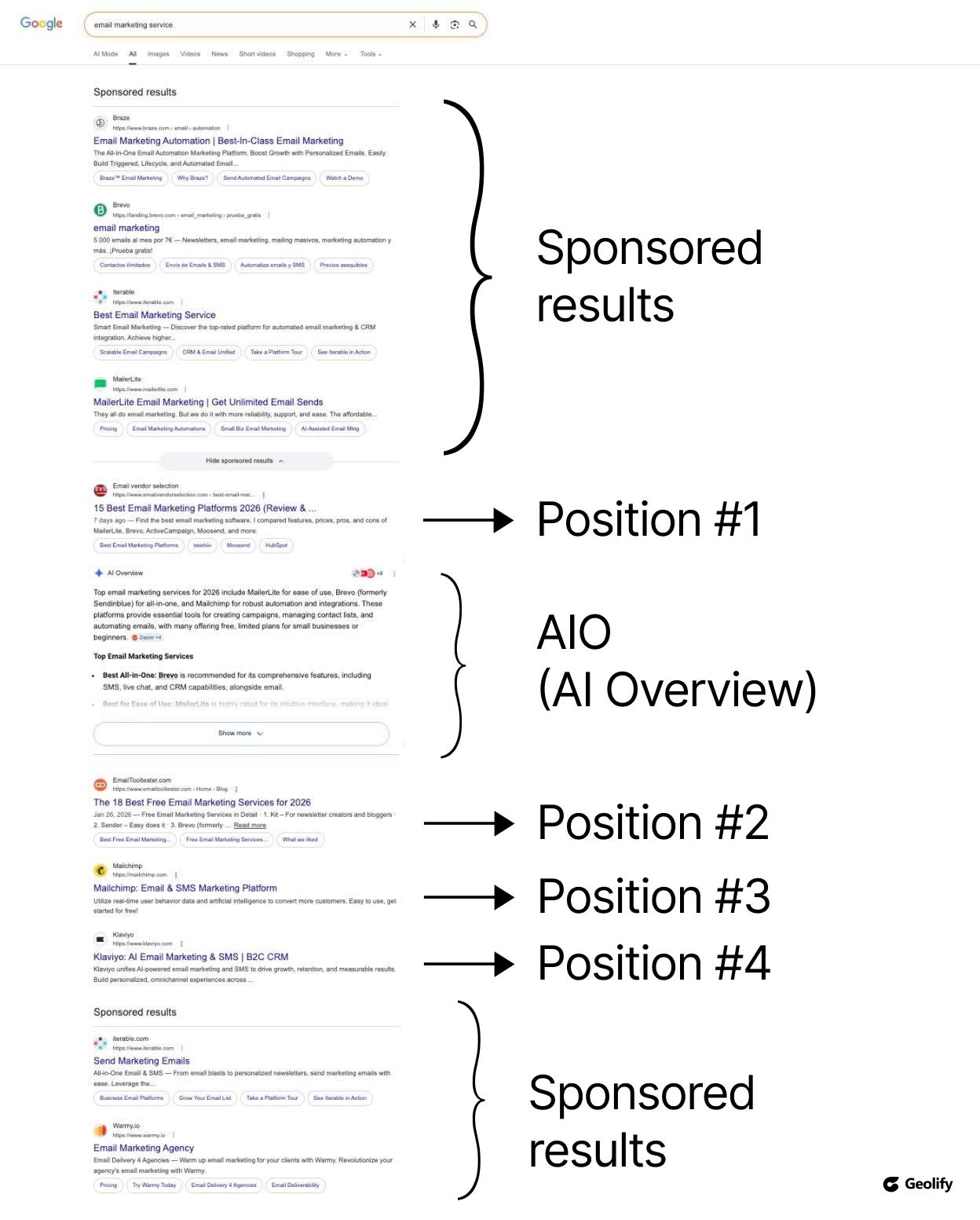
1. What are Google AI Overviews & AI Mode? In the legacy search model, users were presented with "10 blue links" and had to manually synthesize information across multiple tabs. Between 2024 and 2026, Google introduced two powerful AI layers to search:
Both features are powered by custom versions of Gemini 3, integrated directly with Google's search index, ranking systems, and Knowledge Graph to minimize hallucinations and prioritize authoritative sources.
2. The Impact: Soaring Zero-Click Rates and Plummeting Organic CTR When answers are readily available directly on the SERP, users have little incentive to click through to a website. Aggregate studies from 2025–2026 reveal a stark reality:
| Behavioral Metric | Traditional Search | Google with AI Overview | Google AI Mode |
|---|---|---|---|
| Zero-click rate | 34% | 43% | 93% |
| Conversion rate (per click) | 2.8% | ~4–6% | 14.2% |
| Session duration | ~2 mins | ~4 mins | 6+ mins |
| Number of cited sources | N/A | 13.3 sources | 12.6 sources |
Conclusion: The total volume of search clicks is shrinking. However, the remaining clicks from AI Search and AI Mode carry exceptionally high intent, typically correlating with the decision-making or purchasing phase.
3. Why Traditional SEO is No Longer Enough In the traditional SEO landscape, ranking #1–3 practically guaranteed stable traffic. In the AI search era:
In other words: "Ranking at the top" no longer guarantees "being seen." The deciding factor is now whether AI chooses to cite your content in its response—welcome to the new game of citations and brand mentions.
4. GEO – Generative Engine Optimization: Optimizing for AI Search To adapt to AI Overviews, AI Mode, and other answer engines (ChatGPT, Perplexity, Claude), GEO (Generative Engine Optimization) has emerged as the next evolution of SEO.
4.1. SEO vs. GEO
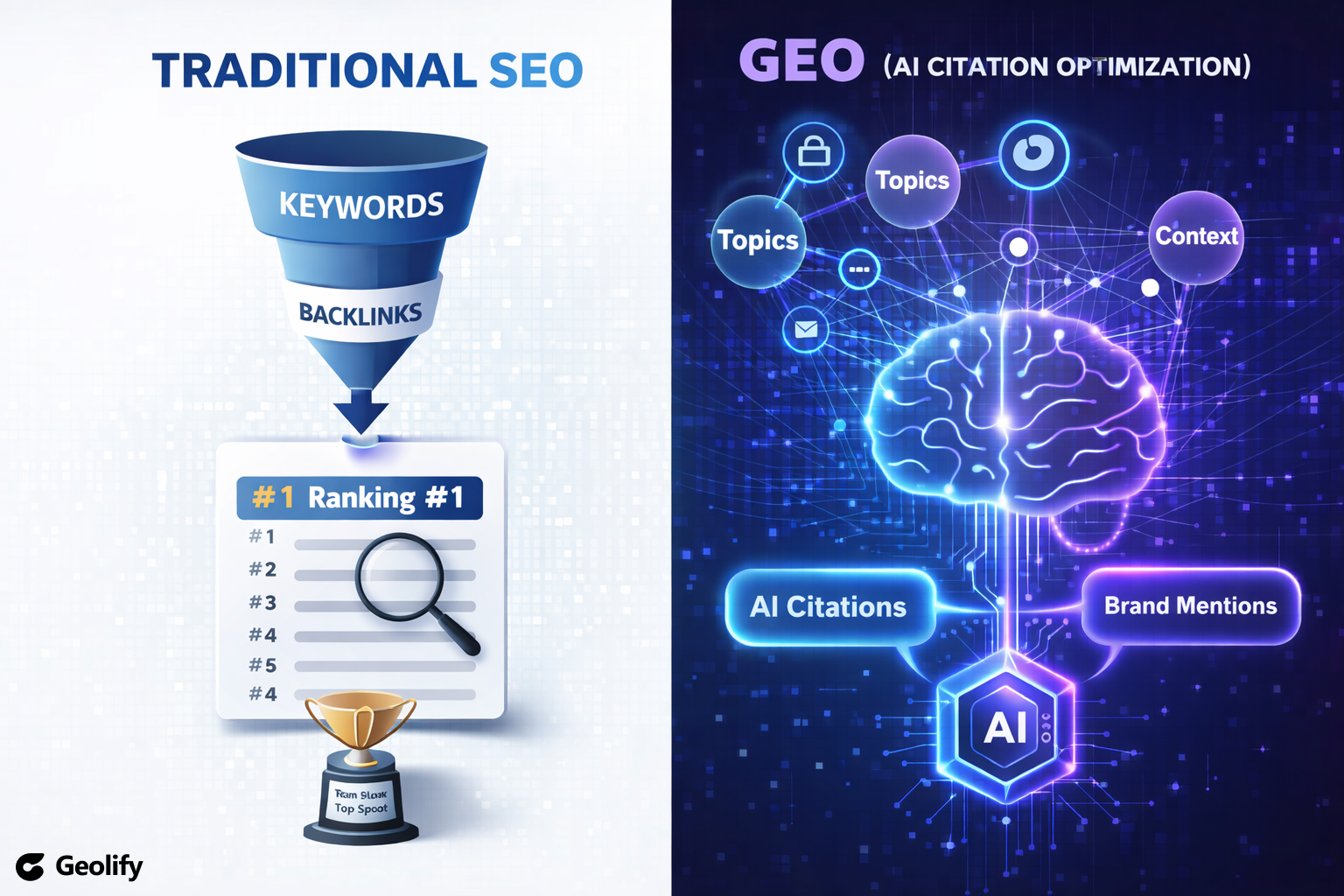
A critical insight: While roughly 52% of AI Overview citations come from the top 10 organic results, nearly 48% of citations are pulled from URLs outside the first page—sometimes not even ranking in the top 100. This indicates that GEO opens the door for domains that may not win the traditional "top 3" search battle but are still selected as authoritative sources by AI. Identifying and capitalizing on these hidden citation opportunities is exactly where a platform like Geolify becomes indispensable for modern growth teams.
4.2. The Role of E-E-A-T in GEO Google's E-E-A-T framework (Experience, Expertise, Authoritativeness, Trustworthiness) has effectively become the "universal language" for various answer engines. In practice, E-E-A-T qualifies your content for the "trusted source pool"; GEO determines whether that specific content is selected and cited in an AI response.
5. What Kind of Content Gets Cited by AI? Based on Geolify extensive research, distinct patterns exist among pages frequently cited by AI Overviews and AI Mode:
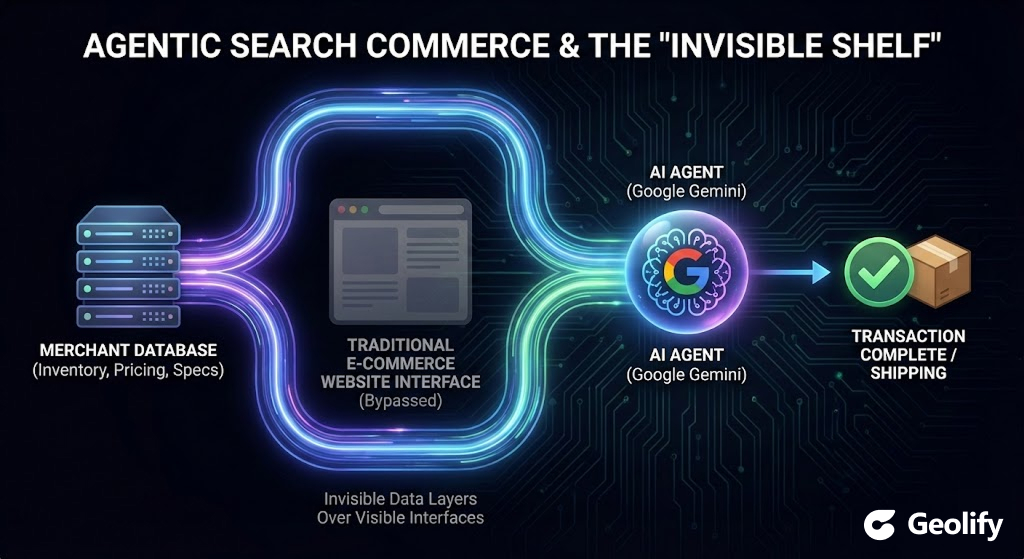
6. Agentic Search and the "Invisible Shelf" in Commerce Beyond summarizing content, Google AI Mode is transitioning from an answer engine to an action engine—where AI executes tasks on the user's behalf.
Through integrations like Canvas (a persistent workspace) and Project Mariner (browser agents automating multi-step workflows), the landscape is shifting. In commerce, the Universal Commerce Protocol (UCP) allows AI agents to directly access inventory, pricing, reviews, and UGC to automatically compare and purchase products for users.
Combined with Native Checkout, an "invisible shelf" is forming. Products now exist primarily in the underlying data that AI reads, rather than just on a graphical web interface that humans click. If your data structure fails to meet the demands of agentic search, you risk disappearing from this new transactional layer entirely, regardless of your traditional SEO rankings.
7. How is AI Seeing Your Brand? If you are a CMO, Head of Growth, or SEO Manager, you are likely facing at least one of these scenarios:
This is exactly why Geolify.ai was built as an interactive GEO Intelligence platform—helping you measure and optimize your visibility across multiple AI answer engines, rather than just tracking legacy keyword rankings.
👉 If you want to know exactly how AI views your brand, start with a free GEO Audit at: Geolify.ai/audit.
In just a few minutes, you can:
In the era of Google AI Overviews & AI Mode, the most important question is no longer "What is my Google ranking?" but rather: "When users ask a question, is AI mentioning my brand in the definitive answer?" Geolify.ai helps you answer that question—and gives you the roadmap to fix it.
Zero UI is quietly reshaping how we search, make decisions, and engage with digital products in the zero-click era powered by AI agents. At platforms like Geolify.ai – a Generative Engine Optimization (GEO) platform – this shift isn’t just theoretical; it’s a fundamental change in how brands must position themselves to remain visible and selected. […]

Answer‑first writing bridges classic SEO with LLM Optimization (LLMO): use keywords, headings and schema, but open every section with a direct answer in the first 40–60 words so humans and AI search engines like Perplexity, ChatGPT and Google AI Overviews can extract it instantly. What Is Answer‑First Writing and Why It Matters Now Answer‑first writing […]
The digital information ecosystem is undergoing its most profound transformation since the dawn of the commercial internet. We have officially moved from the era of Information Retrieval—where users dig through lists of blue links—to the era of Information Synthesis, where AI agents read, reason, and provide direct answers. For businesses, this is not just a […]